
The Cost of Waiting for Things to Break
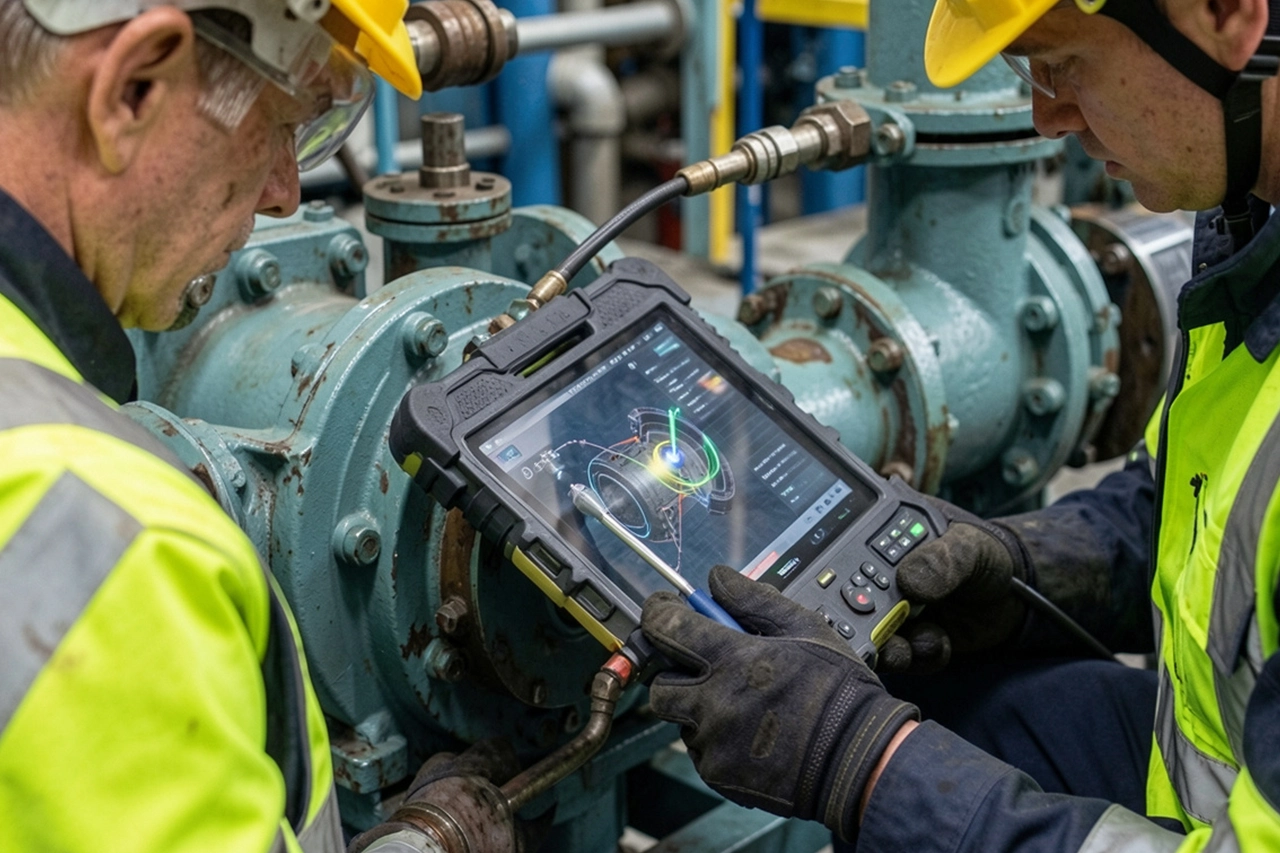
Reactive maintenance — fixing equipment after it fails — costs 3–5 times more than a planned repair on the same component. That’s consistently what maintenance engineers at mines and processing plants across South Africa report.
The reason is straightforward: when something fails unexpectedly, you’re paying for emergency call-outs, premium-priced parts, overtime labour, and the production you lost while the plant was down. Compare that to a bearing replacement scheduled during a planned shutdown – parts ordered in advance, labour at standard rates, zero unplanned downtime.
Condition monitoring is how you get from the first scenario to the second. We measure your equipment while it runs, track changes in vibration, temperature, and oil condition over time, and tell you when something is developing, while you still have time to plan the fix.
What we deliver:
- Vibration analysis reports with ISO fault severity ratings
- Thermal scanning and infrared scanning reports with annotated images
- Oil analysis results with wear particle findings
- Ultrasonic bearing and leak detection reports
- Trending data across multiple survey intervals
- Maintenance action recommendations with urgency classification
All condition monitoring reports are structured to support MHSA Section 11 compliance documentation requirements for mining operations in North West Province. Predictive maintenance programmes designed for Innosa’s mining clients align with the risk-based maintenance obligations under MHSA.
Operational Advantages
Condition Monitoring Methods
Vibration Analysis
Precision vibration measurement on your rotating machinery while it runs under normal load. The frequency spectrum tells us exactly what’s happening inside – imbalance, misalignment, bearing defects, gear tooth wear, structural looseness. Different faults produce different signatures, and we know what we’re looking at.
Standard: ISO 10816 / ISO 20816
Thermal & Infrared Scanning
We use FLIR thermal imaging cameras to scan your electrical switchgear, motor housings, conveyor idlers, and process pipework. Thermal scanning and infrared scanning find anything running hotter than it should – overloaded connections, failing bearings, blocked cooling passages, insulation breakdown in motor windings, all detected non-contact, under live operating conditions.
Thermal scanning is particularly valuable in high-voltage electrical environments and in processing plant MCC rooms where visual inspection doesn’t reveal developing faults.
Equipment: FLIR thermographic cameras | Qualified Level I/II thermographers
Oil Analysis
We take oil samples from your gearboxes, engines, and hydraulic systems and send them to an accredited laboratory. The wear particles in the oil tell you which internal components are degrading. Catch it early and a gearbox oil flush or bearing replacement is a minor planned job. Miss it and you’re doing a full gearbox rebuild.
Ultrasonic Condition Monitoring
Structure-borne ultrasonics detect bearing defects at an earlier stage than vibration analysis alone. We also use it for steam trap condition assessment and compressed air leak detection — leaks that cost real money in energy waste every day.
Industrial Applications
Mining & Quarrying
Manufacturing & Industrial
Power Generation
Commercial Infrastructure
Rotating Equipment
Electrical Infrastructure
Structural Health
Steam & Fluid Systems
Who This Is For
Platinum Mining in Rustenburg
Conveyor drives, crusher motors, mill drives, concentrate pump stations, and main ventilation fans in platinum, chrome, and vanadium operations across the North West Platinum Belt. These are the assets where a failure stops production. We build monitoring programmes around your equipment register and your maintenance shutdown schedule.
Processing Plants & Manufacturing
Production line motors, compressors, cooling tower fans, and process pumps. We work around your production calendar — monthly or quarterly surveys that fit your schedule and feed into your planned maintenance system.
Power Generation & Utilities
Turbines, generators, boiler feed pumps, and cooling fans at power stations and co-generation facilities. Equipment where failure has consequences beyond a single plant.
Regulatory Compliance & Accuracy
| Vibration | ISO 10816 / ISO 20816 severity classification |
| Thermal Scanning | FLIR cameras, Level I/II qualified thermographers |
| Infrared Scanning | Non-contact, conducted under live operating conditions |
| Ultrasonic | SDT and UE Systems instruments |
| Oil Analysis | Accredited third-party laboratory |
| Reports | Trend-based, fault severity rated, action timeline |
| Programme Options | Monthly, quarterly, or campaign-based |
Thermal scanning (also called infrared scanning or thermographic inspection) uses an infrared camera to measure surface temperatures across equipment, electrical panels, and structures. Anything running hotter than it should creates a thermal anomaly in the image, ailing bearings, overloaded electrical connections, blocked cooling passages, and deteriorating motor insulation all show up clearly. It’s conducted non-contact on live equipment, which means no shutdown required and no disruption to operations.
Yes. The Platinum Belt is our primary market for condition monitoring. We design and run programmes for conveyor systems, mill drives, pump stations, and ventilation equipment for mining clients across North West Province. We understand the operating environment, shift patterns, and maintenance window constraints.
Bearing defects in standard industrial machines typically show up in vibration data 4–8 weeks before failure. Thermal scanning catches overheating anomalies days to weeks before a thermal failure. The earlier you establish a baseline, the more lead time you get.
No. All measurements. Vibration, thermal scanning and infrared scanning are taken on operating equipment under normal load. No production interruption required.
Yes. Once-off thermal scanning surveys are available for electrical panels, motor rooms, and process equipment. For critical rotating assets we recommend trending programmes, but a once-off thermal scan is a fast, cost-effective way to identify immediate problems across your facility.