
What the Law Requires
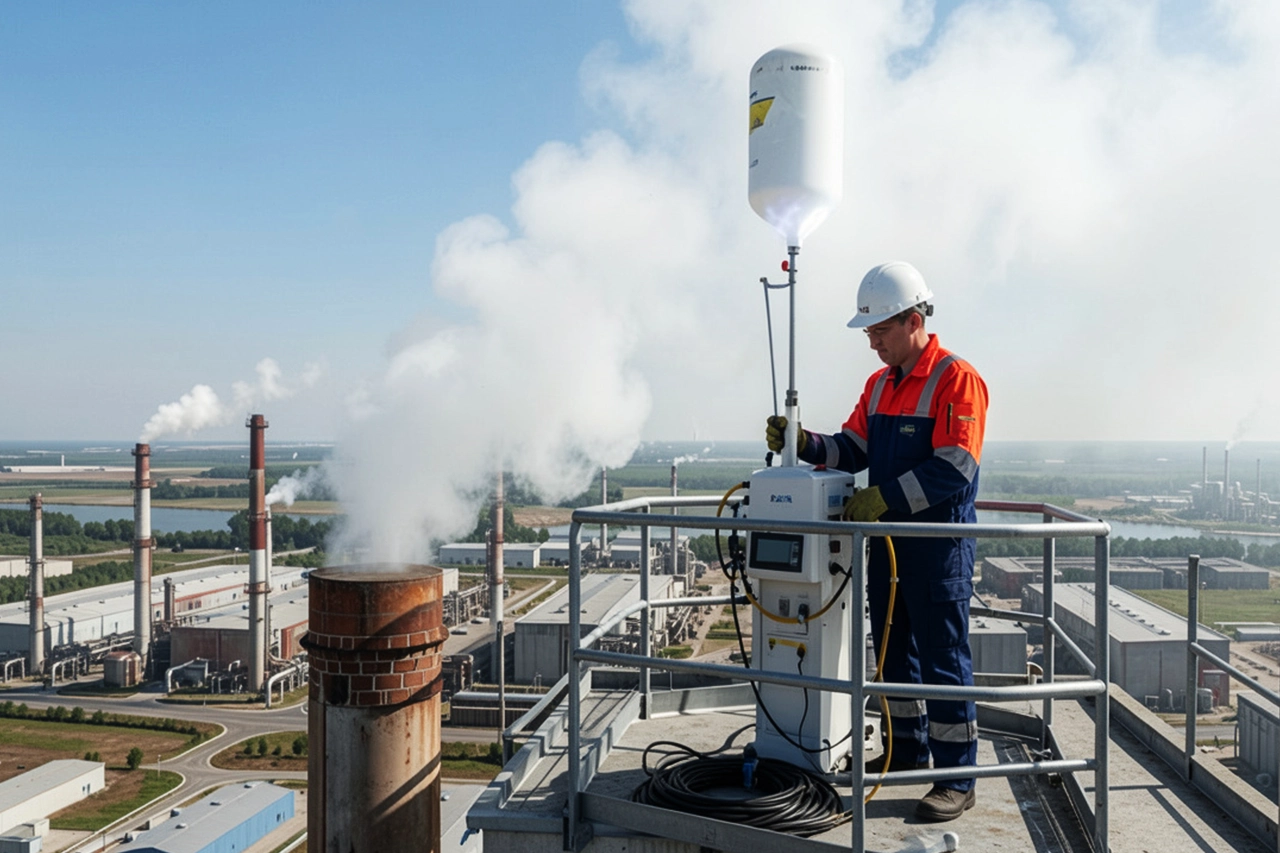
Two pieces of legislation govern most industrial air quality compliance in South Africa, and both have real enforcement consequences:
The National Environmental Management: Air Quality Act (NEM:AQA, Act 39 of 2004) requires facilities conducting listed activities to hold an Atmospheric Emission Licence, comply with Minimum Emission Standards, and report to their licensing authority. Non-compliance can result in licence suspension and criminal prosecution.
The Occupational Health and Safety Act (Act 85 of 1993) requires employers to assess and control their workers’ exposure to hazardous airborne substances. If you haven’t done an occupational exposure assessment and something goes wrong, the liability is yours.
We help you meet both. The monitoring data we produce is structured for DFFE, provincial authority, and DMRE submission.
Regulatory Framework
Air Quality Services
Ambient Air Quality Monitoring
Measurement of pollutant concentrations in the air around your facility. M10, PM2.5, sulphur dioxide, nitrogen oxides, carbon monoxide, VOCs. Referenced against South Africa’s National Ambient Air Quality Standards. This is the data your Atmospheric Emission Licence requires, and the data that protects you when a community complaint lands.
Occupational Exposure Monitoring
Personal air sampling on the workers most exposed to airborne hazards in your facility. Area monitoring at the workstations where exposure is highest. Results compared against South African occupational exposure limits (OELs).
In Rustenburg’s platinum mines: silica dust, platinum dust, diesel particulates, and blasting fumes are the primary occupational exposure risks. We monitor all of them to DMRE and MHSA requirements.
Stack Emissions Testing
Source testing at your industrial stacks, boilers, furnaces, and process vents. We measure pollutant concentrations and calculate mass emission rates, compared against the Minimum Emission Standards in your AEL.
Dust Fallout Monitoring
Deposition gauge monitoring to SANS 1929 methodology. If a community member or regulator claims your operation is causing dust fallout, this is the data that either confirms it or defends you.
Fugitive Dust Assessment
Haul roads, open stockpiles, crushing operations, and material transfer points are typically the biggest uncontrolled dust sources. We identify your highest-impact sources and give you a prioritised action plan.
Industrial Applications
Mining & Mineral Processing
Petrochemical & Refining
Manufacturing & Heavy Industry
Construction & Infrastructure
Power Generation
NEMA Compliance Auditing
Occupational Hygiene Surveys
Scrubber & Filtration Testing
Isokinetic Stack Sampling
Dust Fallout Modeling
Industries We Serve
Platinum & Mining
Silica and platinum dust monitoring, blast fume assessment, and ambient air quality programmes for operations across the North West Platinum Belt and nationally.
Manufacturing & Chemical Processing
Workplace air quality monitoring for facilities handling solvents, coatings, metal fumes, and hazardous chemical substances under HCS Regulations.
Construction
EIA baseline monitoring, construction phase dust compliance, and occupational exposure monitoring for large infrastructure projects.
Power Generation
Stack emissions monitoring for coal-fired boilers and co-generation facilities. Minimum Emission Standards compliance for AEL reporting.
Regulatory Compliance & Accuracy
| Legislation | NEM:AQA Act 39 of 2004, OHS Act 85 of 1993, MHSA |
| Standards | SANS 1929, NAAQS, Minimum Emission Standards |
| Parameters | PM10, PM2.5, silica, platinum dust, VOCs, SO₂, NOₓ, CO |
| Methods | Personal sampling, area monitoring, stack testing, deposition gauges |
| Reports | DFFE / DMRE / provincial authority compliant |
| Turnaround | 5–7 business days from laboratory results |
Yes. Platinum mining is our primary sector for air quality services. Silica dust, platinum salts, diesel particulates, and blasting fumes are the specific hazards we monitor. Our reports satisfy DMRE requirements and feed into your mine’s Medical Surveillance Programme.
If your facility conducts activities listed under Schedule 1 of NEM:AQA — combustion, minerals processing, chemical manufacturing above specified thresholds, you probably need one. Contact us and we’ll assess your operations and tell you clearly whether you trigger the requirements.
Start monitoring immediately. Documented monitoring data is your best defence. It demonstrates proactive compliance. We can mobilise quickly for time-sensitive regulatory situations.
High-risk operations, silica dust in platinum mining – typically require annual monitoring. Lower-risk environments may require monitoring every 2–3 years. We advise on frequency after assessing your operation.
Yes. Baseline monitoring and specialist impact assessment reports for EIA submissions, satisfying DFFE and provincial authority requirements.