
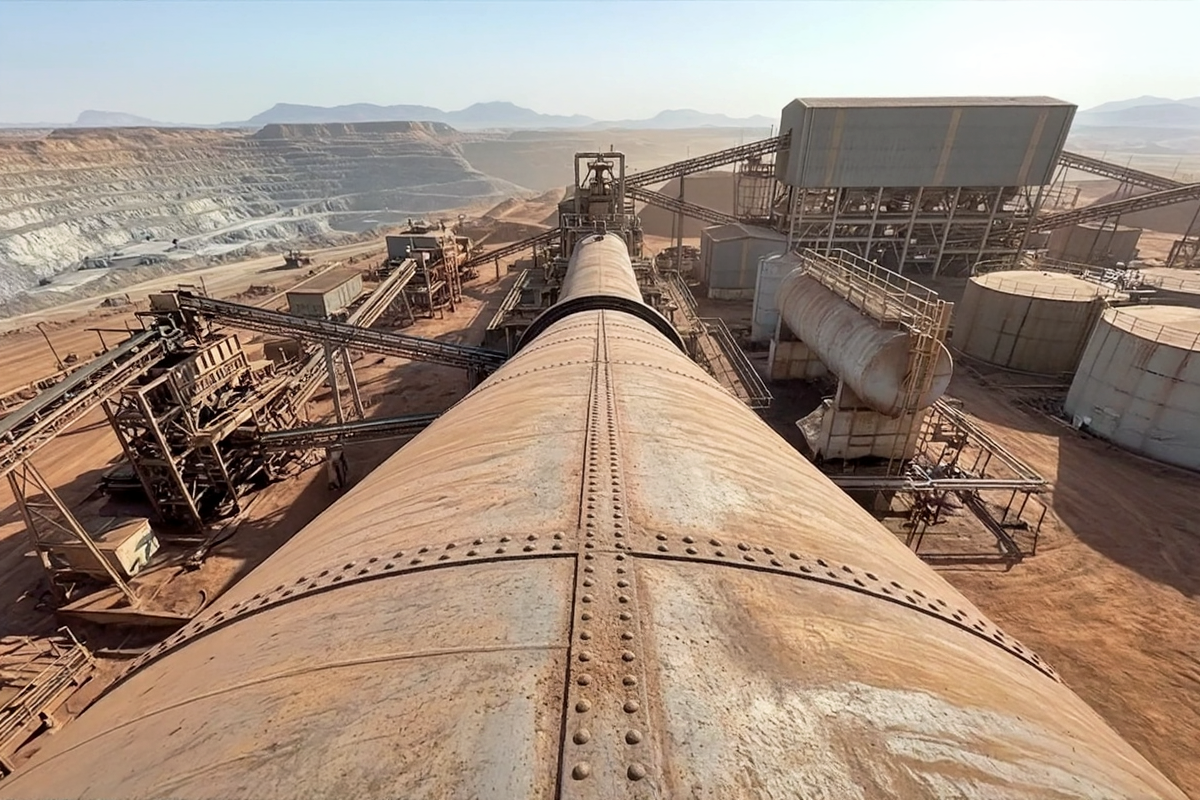
Micro Summary: Certified pressure vessel testing in Rustenburg. PER and SANS 347 compliant NDT inspections that catch corrosion and defects before failure.
Pressure vessel testing exists because pressure equipment failure isn’t a hypothetical risk, it’s a documented cause of serious industrial incidents. It’s specifically and heavily regulated in South Africa for exactly that reason. Our pressure vessel testing services in Rustenburg help businesses like yours detect any defects before they can cause an incident.
I’m Sandile Shembe, founder of Innosa Projects. We’re an ECSA-registered engineering firm based in Rustenburg, and we carry out certified non-destructive testing, including pressure vessel testing, for mining, industrial, and processing clients across the Platinum Belt.
What is pressure vessel testing?
Pressure vessel testing is the inspection and non-destructive testing of pressure-bearing equipment, boilers, receivers, reactors, and process vessels, to confirm they remain structurally sound and safe to operate at their rated pressure. It identifies wall thinning, corrosion, weld defects, and surface cracking before they become a failure.
What does South African law actually require?
Pressure equipment in South Africa is regulated under the Pressure Equipment Regulations (PER), made under Section 43 of the Occupational Health and Safety Act, 1993 (Act 85 of 1993). The regulations apply to pressure equipment with a design pressure equal to or greater than 50 kPa, and require categorisation and conformity assessment in line with SANS 347.
In practice, this means pressure vessels above the regulated threshold require regular inspection and testing, and where a weakness or defect is found, the equipment must be taken out of service until it’s rectified. This is a direct legal requirement with safety consequences attached.
Which NDT methods apply to pressure vessels?
Innosa applies the NDT methods relevant to the specific failure modes pressure vessels are exposed to:
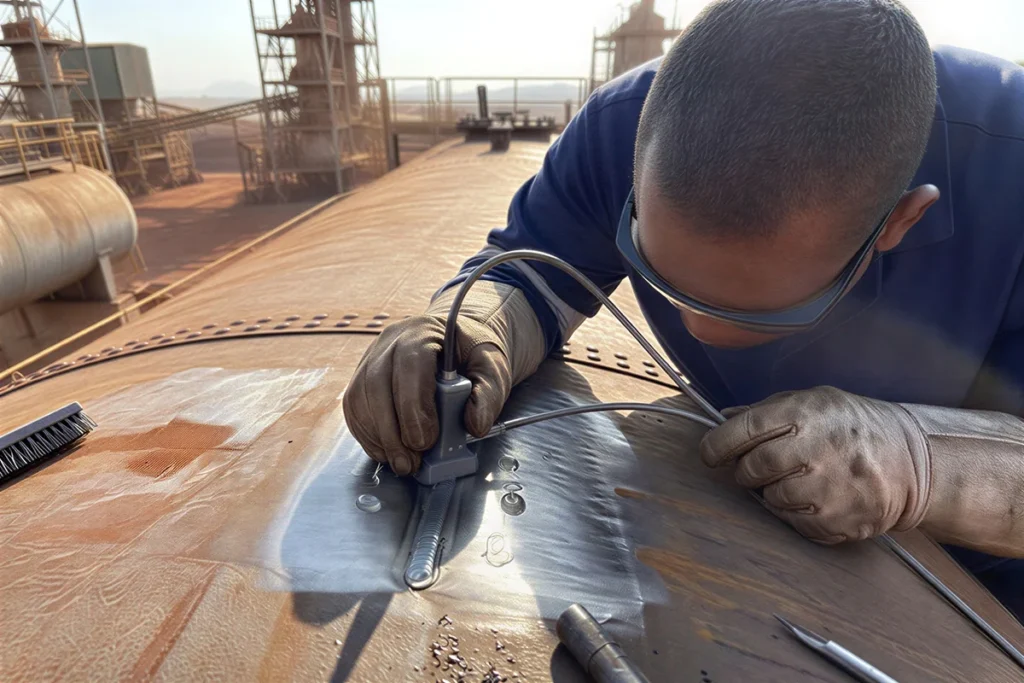
- Ultrasonic testing (UT) to measure wall thickness and detect internal corrosion or thinning
- Radiographic testing (RT) to check weld integrity and detect subsurface defects
- Magnetic particle testing (MPT) to detect surface-breaking cracks on ferrous components
Which methods apply depends on the vessel type, material, and what the inspection is trying to confirm.
How does pressure vessel testing actually work?
At Innosa, the process runs in three stages:
- Assess. We review the vessel against its design specification, service history, and applicable SANS 347 category to determine the correct testing scope.
- Test. Ultrasonic, radiographic, or magnetic particle testing is carried out by our qualified NDT technicians to gather the specific data the inspection requires.
- Report. Findings are documented in a report that supports your compliance record and, where structural findings arise, reviewed by our ECSA-registered Professional Engineer.
**If a pressure vessel inspection is due or overdue, this is the point to act, not after an Approved Inspection Authority flags it. Talk to an engineer directly. We’ll confirm scope, timeline, and cost within 24 hours.**
What happens if a vessel fails inspection?
Under the Pressure Equipment Regulations, where an inspection reveals a weakness or defect that could endanger safety, the equipment must be taken out of service until the defect is rectified to the satisfaction of the approved inspection authority. This makes early, accurate testing directly valuable, catching a defect on a scheduled inspection is a controlled process. Catching it after failure is not.
Who is qualified to carry out this testing?
NDT testing should be carried out by qualified technicians, with structural findings reviewed by a registered Professional Engineer, not signed off by a third party unfamiliar with the specific inspection. At Innosa, structural findings arising from NDT work are reviewed by our own ECSA-registered Professional Engineer. Note: NDT testing supports the compliance and conformity assessment process required under PER and SANS 347, working alongside your appointed Approved Inspection Authority (AIA) where AIA sign-off is required.
Is this relevant beyond mining?
Yes. Any facility operating pressure equipment above the 50 kPa threshold, processing plants, manufacturing facilities, and industrial sites generally, falls under the same regulatory requirement. The common thread is any operator who needs a defensible, dated inspection record, not an assumption that everything is still fine.
Some pressure equipment on South African sites is specified to international codes as well as local ones, particularly on plant built or supplied internationally. Where that applies, testing is carried out with reference to the relevant ASME Section V (examination methods) and Section VIII (pressure vessel) requirements alongside SANS 347, not instead of it.
A real example. NDT in the field, not just the lab.
We’ve applied these same NDT methods on a 50km pipeline integrity assessment for a platinum mining operation in Rustenburg, full scope inspection completed without a production shutdown. It’s the same discipline that pressure vessel testing requires: qualified technicians, the right method for the failure mode in question, and a report that holds up to scrutiny, not just a checked box.
Frequently asked questions
What is pressure vessel testing?
It’s the non-destructive testing and inspection of pressure-bearing equipment to confirm it remains safe to operate at its rated pressure, identifying corrosion, wall thinning, and weld defects before they cause failure.
Is pressure vessel testing a legal requirement in South Africa?
Yes, for pressure equipment with a design pressure of 50 kPa or greater, testing and inspection is required under the Pressure Equipment Regulations (PER), made under the Occupational Health and Safety Act 85 of 1993, in line with SANS 347.
What NDT methods are used for pressure vessel testing?
Commonly ultrasonic testing (wall thickness and corrosion), radiographic testing (weld integrity), and magnetic particle testing (surface cracking), depending on vessel type and material.
What happens if a pressure vessel fails inspection?
Where a weakness or defect is found, the equipment must be taken out of service until it’s rectified to the satisfaction of the approved inspection authority.
How often does pressure vessel testing need to be carried out?
8Inspection frequency depends on the vessel category under SANS 347 and your Approved Inspection Authority’s requirements. Talk to an engineer to confirm the schedule for your equipment.
Related questions
- Can You 3D Scan an Active Mine or Plant Without Stopping Production?
- Drone Stockpile Measurement in South Africa
Book pressure vessel testing before your next scheduled inspection, without having defects found the hard way.
If a pressure vessel inspection is coming due, that’s the point to act, not after an Approved Inspection Authority flags a problem.
Call +27 81 445 3066 or email info@innosaprojects.co.za. We’re based in Rustenburg, mobilise across Gauteng, and KwaZulu-Natal, and work nationally across South Africa.
Choice of related article 1
Choice of related article 2
